What is a Credit-Builder Loan and Where Can You Get One?
Boost your credit and your savings

Boost your credit and your savings


APR range: 8.99% to 29.99%
Loan terms: 24 to 60 months
Loan amounts: Starting at $5,000
Fees: 1.99% - 8.99%
Pros
Cons
Achieve gives a generous rate discount if you enroll in autopay with an eligible Achieve checking account. If you already have one or don’t mind opening a new one, Achieve is worth considering. When you take out a credit-builder loan with Achieve, your money will go into a certificate of deposit (CD), where it will earn interest.
Achieve credit-builder loans come with high annual percentage rates (APRs), meaning that you’ll have to pay more to take out the loan. While your loan will earn interest in a CD account, it likely won’t be enough to offset the cost of the interest payments you make.
Achieve doesn’t have a minimum credit score requirement for the credit-builder loan. To evaluate your eligibility, Achieve will review how you pay off any current debts and assess whether you can afford the monthly payment for your credit-builder loan.

APR range: 8.99%
Loan terms: 24 to 60 months
Loan amounts: $2,000 - $50,000
Fees: None listed
Pros
Cons
Prosper
offers a low-cost credit-builder loan to its members. While you will need to pay a 8.99% APR, your money will earn interest in a savings account as you pay off your loan. This will help offset the (already competitively low) cost of your loan.
You will need to become a member of DCU to get a loan, but you can easily qualify by joining one of their partner organizations.
DCU doesn’t specify its eligibility requirements, but you’ll need to become a member to get a credit-builder loan. You can qualify for DCU membership by being related to a current member, working at a partner company, living in a qualifying community or joining a partner organization.

APR range: 5.95% to 16.79%
Loan terms: Up to 84 months
Loan amounts: Up to $1,000,000
Fees: $19.99/month membership fee
Pros
Cons
In most cases, you won’t get any cash up front when you get a credit-builder loan. Instead, you’ll give the lender a deposit, and once you’ve paid back that amount and any applicable interest and fees, they’ll return your money. Fintech company Prosper
doesn’t always work that way. If you have good credit, it may give you part of your loan up front.
Be sure to shop around before accepting a Prosper
loan, since its interest rates can be steep. You should also budget for the monthly membership fee, which is currently $19.99. That means if you keep your loan for the full 12 months, you’ll pay almost $240 in fees alone.
Prosper but it only runs a soft credit hit when you apply. Soft credit hits don’t hurt your credit score.
Credit-builder loans work differently from traditional loans. Instead of borrowing money that you can use right away, you’ll make fixed monthly payments into an account that the lender holds for you. When your loan term ends, you’ll get your money back — minus any interest or fees.
The real benefit of credit-builder loans? You’ll build a payment history (worth 35% of your credit score). Your lender reports each on-time payment to the credit bureaus, proving to future lenders that you can manage debt responsibly.
If your credit (or lack of credit) has been keeping you from qualifying for credit cards or loans, a credit-builder loan could be a smart first step.
But be aware, you’re not borrowing money you can spend. You won’t find credit-builder loans that give you money upfront. If that’s what you need, then you’ll probably want to look for a bad credit personal loan instead.
Yes, credit-builder loans could be worth it if you need to build credit from scratch and can easily afford the monthly payments.
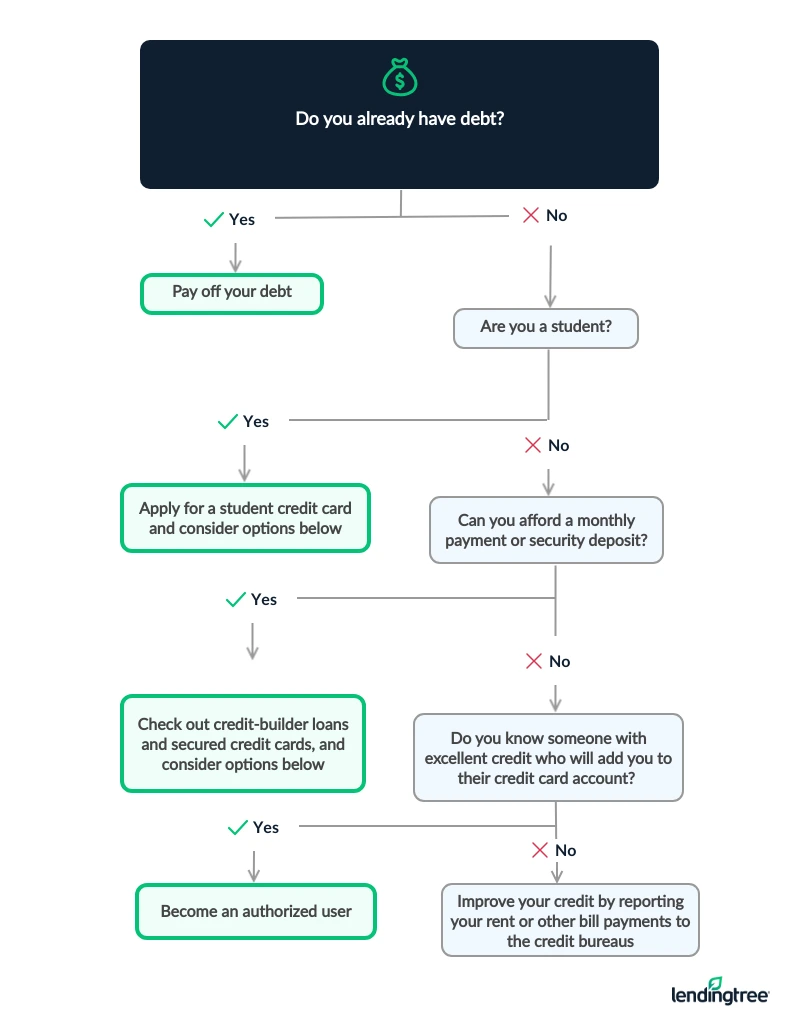
The Consumer Finance Protection Bureau (CFPB) conducted a study and found that credit-builder loans tend to work best for people who don’t already have debt.
Borrowers with no existing debt saw their credit scores rise by about 60 points after using a credit-builder loan.
For borrowers who already had debt, scores dropped slightly, by around 3 points. So, if you already have credit card or loan debt, look into other ways to improve your credit score.
Consider these points before jumping into a credit-builder loan contract.
Use our flowchart to decide if you should apply for a credit-builder loan or choose an alternative.

| What it is | How it builds credit | Pros and cons | |
|---|---|---|---|
| Secured credit card | A credit card with a security deposit that acts as your credit limit | Reports payments to credit bureaus | Pros: Low credit requirements, can graduate to a regular card with responsible use Cons: Requires a security deposit |
| Become an authorized user | Being added to a trusted family member or friend’s credit card account | Card payment activity appears on your credit account | Pros: Free, no credit requirement Cons: Only works if your relative/friend makes payments on time and keeps the balance low |
| Pay off current debt | Paying off any credit cards or loans with balances | Improves your credit utilization ratio, which is part of “amounts owed” (worth 30% of your FICO Score) | Pros: One of the best long-term ways to improve your credit Cons: Takes time and discipline |
Expert
Our personal loan writers and editors have 32 years of combined editorial experience and 28 years of combined personal finance experience.
Verified
100% of our content is reviewed by certified personal finance professionals and meets compliance and legal standards.
Trustworthy
We put your interests first. We’ll tell you about any loan drawbacks and be clear about when to consider alternatives.
Yes. Although credit-builder loans are easier to get than traditional loans, the lender will deny you if you don’t meet its minimum requirements.
In short, yes. Paying off a credit-builder loan early defeats the purpose of getting a loan to establish a positive payment history. The more on-time payments you make, the more you extend your credit history and demonstrate that you’re a responsible borrower.
Borrow as much as you can comfortably pay back. If you can’t make your loan payments on time every time, your credit will take a hit, defeating the purpose of the loan.
Yes, although you may need to have at least fair credit in order to get a personal loan, and even better credit to get the cheapest rates. You can shop online for personal loan lenders to see if you qualify, as well as check with your own bank or credit union.
To choose the top four credit-builder loans available to consumers across the United States, we systematically reviewed and evaluated the top credit-builder loans currently on the market. We rated lenders across fifteen data points in three categories.
Based on our comprehensive rating system, the best credit-builder loans come from Credit Karma, BMO, DCU and MoneyLion.
We gave lenders points for making their loans available to consumers nationwide, for not requiring membership to get a loan and for skipping a hard credit pull when evaluating loan eligibility.
To receive top marks, lenders must offer competitive interest rates, low fees and flexible repayment terms.
We used trusted third-party sources to assess the customer experience with each lender, awarding points to lenders who refund interest and put funds into an account that earns dividends.
Our writers and editors dig through the facts, contact lenders directly and even go through the application process ourselves if it helps better explain what you can expect. As a Certified Financial Education Instructor℠, I’m committed to breaking down complex financial details so people can make confident, informed decisions with their money.
Jessica’s experience in editing and financial education helps shape LendingTree articles that are clear, accurate and truly useful to readers. Her certification means our recommendations are built on a foundation of consumer-first financial knowledge — not just numbers.