LendingTree is compensated by companies whose listings appear on this site. This compensation may impact how and where listings appear (such as the order or which listings are featured). This site does not include all companies or products available.
How Does LendingTree Get Paid?
LendingTree is compensated by companies whose listings appear on this site. This compensation may impact how and where listings appear (such as the order or which listings are featured). This site does not include all companies or products available.
Advertising Disclosure
LendingTree is an advertising-supported comparison service. The site features products from our partners as well as
institutions which are not advertising partners. While we make an effort to include the best deals available to the
general public, we make no warranty that such information represents all available products. We are compensated by
companies on this site and this compensation may impact how and where offers appear on this site (such as the order).
Advertising Disclosure
LendingTree is an advertising-supported comparison service. The site features products from our partners as well as
institutions which are not advertising partners. While we make an effort to include the best deals available to the
general public, we make no warranty that such information represents all available products. We are compensated by
companies on this site and this compensation may impact how and where offers appear on this site (such as the order).
American Express Disclosure
Terms apply to American Express benefits and offers. Visit americanexpress.com to learn more.
Many of the products on this page are from partners who compensate us, but this does not influence our recommendations. Read disclosures (opens in a new tab).
Best travel credit cards by annual fee
Not every traveler wants to pay a premium annual fee. Whether you’re looking for a $0 card or a high-end luxury experience, here are the best travel credit cards grouped by fee range so you can quickly find the option that fits your budget.
These cards keep costs low while still offering solid rewards and travel perks.
The information related to the Hilton Honors Aspire Card from American Express has been collected by LendingTree and has not been reviewed or provided by the issuer of this card prior to publication. Terms apply.
The right card makes it possible
Compare the best credit cards for travel
Below you’ll be able to do a side-by-side comparison of our picks for the best travel credit cards. You’ll see a wide range of annual fees, rewards rates and welcome offers — from low-cost starter cards to premium options packed with perks.
NaN-NaN of 15 cards
Additional details collapsed
Credit card comparison showing 15 cards with details including ratings, fees, APR rates, and rewards
The information related to the Chase Sapphire Reserve® has been collected by LendingTree and has not been reviewed or provided by the issuer of this card prior to publication.
Bank of America® Premium Rewards® EliteCredit Card
The information related to the Bank of America® Premium Rewards® Elite Credit Card has been collected by LendingTree and has not been reviewed or provided by the issuer of this card prior to publication.
The information related to the Hilton Honors Aspire Card from American Express has been collected by LendingTree and has not been reviewed or provided by the issuer of this card prior to publication. Terms apply.
The information related to the Citi Strata Premier® Card has been collected by LendingTree and has not been reviewed or provided by the issuer of this card prior to publication.
The information related to the Bilt World Elite Mastercard® has been collected by LendingTree and has not been reviewed or provided by the issuer of this card prior to publication.
Bank of America® Travel Rewards Credit Cardfor Students
The information related to the Bank of America® Travel Rewards Credit Card for Students has been collected by LendingTree and has not been reviewed or provided by the issuer of this card prior to publication.
Our experts rate credit cards based on several factors including card benefits, bonus offers and independent research. Credit card issuers do not influence or have a say in our card ratings.
Earn 2 Miles per dollar on every purchase, every day
Earn 10 Miles per dollar on hotels and rental cars booked through Capital One Travel
Earn 5X Miles per dollar on flights booked through Capital One Travel
1X - 8X points
Earn 8x points on all purchases through Chase Travel℠, including The Edit℠
Earn 4x points on flights and hotels booked direct
Earn 3x points on dining worldwide
Earn 1x points on all other purchases
1.5X - 12X points
Earn 12 Points per $1 spent on Hotels, Car Rentals, and Attractions booked on cititravel.com
Earn 6 Points per $1 spent on Air Travel booked on cititravel.com
Earn 6 Points per $1 spent at Restaurants including Restaurant Delivery Services on CitiNights℠ purchases, every Friday and Saturday from 6 PM to 6 AM ET; earn 3 Points per $1 spent any other time
Earn 1.5 Points per $1 spent on All Other Purchases
5X points
Earn 5X Membership Rewards® points on flights booked directly with airlines or with American Express Travel® on up to $500,000 on these purchases per calendar year
Earn 5X Membership Rewards® points on prepaid hotels booked with American Express Travel®.
Terms apply.
1.5X - 2X points
Earn unlimited 2 points for every $1 spent on travel and dining purchases
Earn unlimited 1.5 points for every $1 spent on all other purchases
1X - 3X miles
Earn 3X Miles on Delta purchases.
Earn 1X Mile on all other eligible purchases.
3X - 14X points
Earn 14X points on eligible purchases at hotels or resorts in the Hilton Portfolio.
Earn 7X points on flights booked directly with airlines or amextravel.com, car rentals booked directly from select car rental companies and U.S. restaurants.
Earn 3X points on other purchases.
1X - 5X points
Enjoy benefits such as 5x on travel purchased through Chase Travel℠
Earn 3x on dining, select streaming services and online groceries
Earn 2x on all other travel purchases
Earn 1x on all other purchases
1X - 10X points
Earn 10x on Hotels, Car Rentals, and Attractions booked through CitiTravel.com. Earn 3 Points per $1 spent on Air Travel and Other Hotel Purchases.
Earn 3 Points per $1 spent on Restaurants.
Earn 3 Points per $1 spent on Supermarkets.
Earn 3 Points per $1 spent on Gas and EV Charging Stations.
Earn 1 Point per $1 spent on All Other Purchases
Earn a $100 Annual Hotel Benefit: Once per calendar year, enjoy $100 off a single hotel stay of $500 or more (excluding taxes and fees) when booked through CitiTravel.com. Benefit applied instantly at time of booking.
Travel insurance protection: Trip Cancellation and Trip Interruption (Common Carrier), Trip Delay, Lost or Damaged Luggage, MasterRental Coverage (Car Rental).
2X - 5X Miles
Earn 2X Miles per dollar on every purchase, every day
Earn 5X Miles per dollar on hotels and rental cars booked through Capital One Travel
1X - 5X points
Earn 1X points on rent payments without the transaction fee, up to 100,000 points each calendar year
Earn up to 5X Bilt points on Lyft rides when you link your Bilt account and pay with your Bilt card
Earn 2X points on travel
Earn 3X points on dining
Earn 1X points on other purchases
Use the card 5 times each statement period to earn points
2X - 10X Miles
Earn 2X Miles on every purchase
Earn 5X Miles on flights and vacation rentals booked through Capital One's travel booking site
Earn 10X Miles per dollar on hotels and rental cars booked through Capital One's travel booking site
1.5X points
1.5X Miles
1.5% - 5% Cash Back
Earn 1.5% Cash Back on every purchase, every day
Earn 5% Cash Back on hotels, vacation rentals and rental cars booked through Capital One Travel
Welcome Offer
75,000 milesWelcome offer: 75,000 miles
Earn 75,000 Miles when you spend $4,000 on purchases in the first 3 months from account opening
125,000 pointsWelcome offer: 125,000 points
Earn 125,000 bonus points after you spend $6,000 on purchases in the first 3 months from account opening.
75,000 pointsWelcome offer: 75,000 points
Earn 75,000 bonus Points after spending $6,000 in the first 3 months of account opening.
As high as 175,000 pointsWelcome offer: As high as 175,000 points
You may be eligible for as high as 175,000 Membership Rewards® Points after spending $12,000 in eligible purchases on your new Card in your first 6 months of Membership. Welcome offers vary and you may not be eligible for an offer.
75,000 pointsWelcome offer: 75,000 points
75,000 online bonus points — a $750 value — after you make at least $5,000 in purchases in the first 90 days of account opening
100,000 milesWelcome offer: 100,000 miles
Earn 100,000 Bonus Miles after you spend $6,000 in purchases with your new Card, and an additional 25,000 bonus miles after you make an additional $3,000 in purchases on the Card, both within your first 6 months. Ends 04/01/2026.
175,000 pointsWelcome offer: 175,000 points
Earn 175,000 Hilton Honors Bonus Points
with the Hilton Honors American Express Aspire Card after you spend $6,000 in purchases on the Card within your first 6 months of Card Membership. Offer ends 1/14/2026.
75,000 pointsWelcome offer: 75,000 points
Earn 75,000 bonus points after you spend $5,000 on purchases in the first 3 months from account opening.
60,000 pointsWelcome offer: 60,000 points
Earn 60,000 bonus ThankYou® Points after spending $4,000 in the first 3 months of account opening, redeemable for $600 in gift cards or travel rewards at thankyou.com.
up to 1,000 dollarsWelcome offer: up to 1,000 dollars
Earn up to $1,000 towards travel once you spend $4,000 on purchases within the first 3 months of account opening
N/AWelcome offer: N/A
150,000 milesWelcome offer: 150,000 miles
Earn 150,000 Miles once you spend $30,000 in the first 3 months from account opening
25,000 pointsWelcome offer: 25,000 points
25,000 online bonus points after you make at least $1,000 in purchases in the first 90 days of account opening - that can be a $250 statement credit toward travel purchases
Unlimited Mile-for-Mile matchWelcome offer: Unlimited Mile-for-Mile match
Unlimited Mile-for-Mile match for all new cardmembers. Discover gives you an unlimited match of all the Miles you’ve earned at the end of your first year. There’s no signing up, no minimum spending or maximum rewards. Just a Miles-for-Miles match. You could turn 35,000 Miles into 70,000 Miles.
N/AWelcome offer: N/A
Recommended Credit
Excellent
Between
720 - 850
excellent
Credit cards for excellent credit are intended for those with a credit score between 720 - 850.
Credit scores ranges may vary. Your individual chance at approval may vary due to factors such as creditors using a particular variation at their discretion.
Curious about your credit score?
MyLendingTree is a free tool where you can access your credit score, get expert tips to improve your credit and plan out your financial future.
Excellent
Between
750 - 850
excellent
Credit cards for excellent credit are intended for those with a credit score between 750 - 850.
Credit scores ranges may vary. Your individual chance at approval may vary due to factors such as creditors using a particular variation at their discretion.
Curious about your credit score?
MyLendingTree is a free tool where you can access your credit score, get expert tips to improve your credit and plan out your financial future.
Good / Excellent
Between
660 - 850
good / excellent
Credit cards for good / excellent credit are intended for those with a credit score between 660 - 850.
Credit scores ranges may vary. Your individual chance at approval may vary due to factors such as creditors using a particular variation at their discretion.
Curious about your credit score?
MyLendingTree is a free tool where you can access your credit score, get expert tips to improve your credit and plan out your financial future.
Good / Excellent
Excellent
Between
0 - 0
excellent
Credit cards for excellent credit are intended for those with a credit score between 0 - 0.
Credit scores ranges may vary. Your individual chance at approval may vary due to factors such as creditors using a particular variation at their discretion.
Curious about your credit score?
MyLendingTree is a free tool where you can access your credit score, get expert tips to improve your credit and plan out your financial future.
Good / Excellent
Good / Excellent
Excellent
Between
750 - 850
excellent
Credit cards for excellent credit are intended for those with a credit score between 750 - 850.
Credit scores ranges may vary. Your individual chance at approval may vary due to factors such as creditors using a particular variation at their discretion.
Curious about your credit score?
MyLendingTree is a free tool where you can access your credit score, get expert tips to improve your credit and plan out your financial future.
Good / Excellent
Between
660 - 850
good / excellent
Credit cards for good / excellent credit are intended for those with a credit score between 660 - 850.
Credit scores ranges may vary. Your individual chance at approval may vary due to factors such as creditors using a particular variation at their discretion.
Curious about your credit score?
MyLendingTree is a free tool where you can access your credit score, get expert tips to improve your credit and plan out your financial future.
Good / Excellent
Between
680 - 850
good / excellent
Credit cards for good / excellent credit are intended for those with a credit score between 680 - 850.
Credit scores ranges may vary. Your individual chance at approval may vary due to factors such as creditors using a particular variation at their discretion.
Curious about your credit score?
MyLendingTree is a free tool where you can access your credit score, get expert tips to improve your credit and plan out your financial future.
Good / Excellent
Between
660 - 850
good / excellent
Credit cards for good / excellent credit are intended for those with a credit score between 660 - 850.
Credit scores ranges may vary. Your individual chance at approval may vary due to factors such as creditors using a particular variation at their discretion.
Curious about your credit score?
MyLendingTree is a free tool where you can access your credit score, get expert tips to improve your credit and plan out your financial future.
Excellent
Between
720 - 850
excellent
Credit cards for excellent credit are intended for those with a credit score between 720 - 850.
Credit scores ranges may vary. Your individual chance at approval may vary due to factors such as creditors using a particular variation at their discretion.
Curious about your credit score?
MyLendingTree is a free tool where you can access your credit score, get expert tips to improve your credit and plan out your financial future.
Good / Excellent
Between
720 - 850
good / excellent
Credit cards for good / excellent credit are intended for those with a credit score between 720 - 850.
Credit scores ranges may vary. Your individual chance at approval may vary due to factors such as creditors using a particular variation at their discretion.
Curious about your credit score?
MyLendingTree is a free tool where you can access your credit score, get expert tips to improve your credit and plan out your financial future.
Good / Excellent
Between
670 - 850
good / excellent
Credit cards for good / excellent credit are intended for those with a credit score between 670 - 850.
Credit scores ranges may vary. Your individual chance at approval may vary due to factors such as creditors using a particular variation at their discretion.
Curious about your credit score?
MyLendingTree is a free tool where you can access your credit score, get expert tips to improve your credit and plan out your financial future.
Limited / Poor
Between
300 - 540
limited / poor
Credit cards for limited / poor credit are intended for those with a credit score between 300 - 540.
Credit scores ranges may vary. Your individual chance at approval may vary due to factors such as creditors using a particular variation at their discretion.
Curious about your credit score?
MyLendingTree is a free tool where you can access your credit score, get expert tips to improve your credit and plan out your financial future.
Methodology: How we chose the best travel credit cards
We take a comprehensive, data-driven approach to identify the best travel credit cards. We use an objective rating and ranking system that evaluates over 200 credit cards from more than 50 issuers. All recommendations are made by LendingTree’s editorial team, completely independent of affiliate partnerships or compensation. Every card is selected based on its merit and ability to help people achieve their financial goals. We use the following criteria to make our picks:
We calculate the value of rewards and perks for the average cardholder using U.S. Bureau of Labor Statistics data and an annual spend of $20,000, minus the annual fee. This value includes the card’s sign-up bonus, annual bonus (including free night certificates) and travel perks like lounge access and travel credits. We look at the average rewards earned over two years to balance out a card’s ongoing value with its first-year value.
We consider how easy the rewards are to use, looking at factors like expiration dates, minimum thresholds to redeem, blackout dates and the availability of flexible redemption options like travel statement credits and cash back.
We also compare a card’s benefits, such as purchase protections, travel protections and elite status benefits against benefits from other cards.
Note that our ratings are a starting point for comparing and choosing the best travel credit card. However, your needs may be different from the average cardholder. You should consider the amount you’re likely to spend in a card’s bonus categories and which benefits you value to choose the best card for you.
Our experts rate credit cards based on several factors including card benefits, bonus offers and independent research. Credit card issuers do not influence or have a say in our card ratings.
Annual Fee
$395
Rewards Rate
Earn 2 Miles per dollar on every purchase, every day
Earn 10 Miles per dollar on hotels and rental cars booked through Capital One Travel
Earn 5X Miles per dollar on flights booked through Capital One Travel
2X - 10X miles
Welcome Offer
Earn 75,000 Miles when you spend $4,000 on purchases in the first 3 months from account opening
75,000 miles
Credit Needed
Excellent
Between
720 - 850
excellent
Credit cards for excellent credit are intended for those with a credit score between 720 - 850.
Credit scores ranges may vary. Your individual chance at approval may vary due to factors such as creditors using a particular variation at their discretion.
Curious about your credit score?
MyLendingTree is a free tool where you can access your credit score, get expert tips to improve your credit and plan out your financial future.
Earn 75,000 bonus miles when you spend $4,000 on purchases in the first 3 months from account opening, equal to $750 in travel
Receive a $300 annual credit for bookings through Capital One Travel, where you'll get Capital One's best prices on thousands of trip options
Get 10,000 bonus miles (equal to $100 towards travel) every year, starting on your first anniversary
Earn unlimited 10X miles on hotels and rental cars booked through Capital One Travel and 5X miles on flights and vacation rentals booked through Capital One Travel
Earn unlimited 2X miles on all other purchases
Enjoy access to 1,300+ lounges worldwide, including Capital One Lounge and Landing locations and participating Priority Pass lounges, after enrollment
Use your Venture X miles to easily cover travel expenses, including flights, hotels, rental cars and more—you can even transfer your miles to your choice of 15+ travel loyalty programs
Enjoy a $100 experience credit and other premium benefits with every hotel and vacation rental booked from the Premier Collection
Receive up to a $120 credit for Global Entry or TSA PreCheck®
Top rated mobile app
For Capital One products listed on this page, some of the benefits may be provided by Visa® or Mastercard® and may vary by product. See the respective Guide to Benefits for details, as terms and exclusions apply
Best credit card for travel
Top perk: Unlimited airport lounge access to Capital One Lounges and Priority Pass™, a perk that can more than pay for the annual fee with just a few trips.
Pros
Extensive lounge access
10,000 bonus miles each year
Up to $300 annual travel credit
Up to $120 Global Entry or TSA PreCheck® credit
Transfer miles to 15+ travel loyalty programs
Cons
$395 annual fee
Travel credit and benefits tied to travel portal
The Capital One Venture X Rewards Credit Card is the best all-around travel card thanks to its reasonable annual fee paired with premium-level perks. You’ll get exceptional value through a $300 annual travel credit through Capital One’s travel booking site, airport lounge access and up to $120 in TSA PreCheck® or Global Entry credits, all without paying the ultra-high fees of other premium cards. In fact, many cardholders can offset most (or even all) of the card’s annual fee through the travel credit and annual bonus miles alone. Plus, you can transfer Capital One miles to more than 15 airline and hotel loyalty programs.
The information related to the Chase Sapphire Reserve® has been collected by LendingTree and has not been reviewed or provided by the issuer of this card prior to publication.
Our experts rate credit cards based on several factors including card benefits, bonus offers and independent research. Credit card issuers do not influence or have a say in our card ratings.
Annual Fee
$795
Rewards Rate
Earn 8x points on all purchases through Chase Travel℠, including The Edit℠
Earn 4x points on flights and hotels booked direct
Earn 3x points on dining worldwide
Earn 1x points on all other purchases
1X - 8X points
Welcome Offer
Earn 125,000 bonus points after you spend $6,000 on purchases in the first 3 months from account opening.
125,000 points
Credit Needed
Excellent
Between
750 - 850
excellent
Credit cards for excellent credit are intended for those with a credit score between 750 - 850.
Credit scores ranges may vary. Your individual chance at approval may vary due to factors such as creditors using a particular variation at their discretion.
Curious about your credit score?
MyLendingTree is a free tool where you can access your credit score, get expert tips to improve your credit and plan out your financial future.
Earn 125,000 bonus points after you spend $6,000 on purchases in the first 3 months from account opening.
Get more than $2,700 in annual value with Sapphire Reserve.
Earn 8x points on all purchases through Chase Travel℠, including The Edit℠ and 4x points on flights and hotels booked direct. Plus, earn 3x points on dining worldwide & 1x points on all other purchases
$300 annual travel credit as reimbursement for travel purchases charged to your card each account anniversary year.
Access over 1,300 airport lounges worldwide with a complimentary Priority Pass™ Select membership, plus every Chase Sapphire Lounge® by The Club with two guests. Plus, up to $120 towards Global Entry, NEXUS, or TSA PreCheck® every 4 years
Get up to $150 in statement credits every six months for a maximum of $300 annually for dining at restaurants that are part of Sapphire Reserve Exclusive Tables.
Count on Trip Cancellation/Interruption Insurance, Auto Rental Coverage, Lost Luggage Insurance, no foreign transaction fees, and more.
Get complimentary Apple TV+, the exclusive streaming home of Apple Originals. Plus Apple Music — all the music you love, across all your devices. Subscriptions run through 6/22/27 — a value of $250 annually
Member FDIC
Best travel benefits credit card
Top perk: Over $2,700 in annual value, including $1,200+ in travel perks and $1,500+ in lifestyle credits.
Pros
High earning rate on travel and dining
Global Entry, TSA PreCheck® or NEXUS fee credit
Priority PassTM lounge access
Top-notch travel insurance
IHG One Rewards Platinum Elite status
Cons
Extremely high $795 annual fee
$195 authorized user fee
Some of its credits may be challenging to use
The Chase Sapphire Reserve® is the best credit card for luxury travel benefits and remains one of the most popular travel cards thanks to its extensive list of premium perks and protections. Its recent annual fee increase also brought added value, including a $300 annual travel credit, a $469 Priority Pass™ Select membership, IHG® One Rewards Platinum Elite status and a $500 credit for stays with The EditSM — plus some of the most comprehensive travel insurance offered by any card.
Our experts rate credit cards based on several factors including card benefits, bonus offers and independent research. Credit card issuers do not influence or have a say in our card ratings.
Annual Fee
$595
Rewards Rate
Earn 12 Points per $1 spent on Hotels, Car Rentals, and Attractions booked on cititravel.com
Earn 6 Points per $1 spent on Air Travel booked on cititravel.com
Earn 6 Points per $1 spent at Restaurants including Restaurant Delivery Services on CitiNights℠ purchases, every Friday and Saturday from 6 PM to 6 AM ET; earn 3 Points per $1 spent any other time
Earn 1.5 Points per $1 spent on All Other Purchases
1.5X - 12X points
Welcome Offer
Earn 75,000 bonus Points after spending $6,000 in the first 3 months of account opening.
75,000 points
Credit Needed
Good / Excellent
Between
660 - 850
good / excellent
Credit cards for good / excellent credit are intended for those with a credit score between 660 - 850.
Credit scores ranges may vary. Your individual chance at approval may vary due to factors such as creditors using a particular variation at their discretion.
Curious about your credit score?
MyLendingTree is a free tool where you can access your credit score, get expert tips to improve your credit and plan out your financial future.
Earn 75,000 bonus Points after spending $6,000 in the first 3 months of account opening.
Earn 12 Points per $1 spent on Hotels, Car Rentals, and Attractions booked on cititravel.com and 6 Points per $1 spent on Air Travel booked on cititravel.com
Earn 6 Points per $1 spent at Restaurants including Restaurant Delivery Services on CitiNights℠ purchases, every Friday and Saturday from 6 PM to 6 AM ET. Earn 3 Points per $1 spent any other time
Earn 1.5 Points per $1 spent on All Other Purchases
Up to $300 Annual Hotel Benefit: Each calendar year, enjoy up to $300 off a hotel stay of two nights or more when booked through cititravel.com.
No Foreign Transaction Fees
Best for elevated travel rewards and everyday value
Top perk: Access to premium airport lounges, including a Priority Pass™ Select membership and four yearly passes to American Airlines Admirals Club®.
Pros
Premium lounge access, including Priority Pass™ and Admirals Club® passes
Strong rewards on everyday spending and Citi Travel® bookings
Nearly $1,500 in annual credits
Strong airline and hotel transfer partners (including AAdvantage®)
Cons
High $595 annual fee
Top earning rates require booking through Citi Travel®
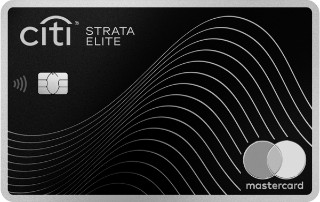
The Citi Strata Elite℠ Card is the best card for elevated travel rewards and everyday value because it offers premium earning rates on the purchases you make most often — not just travel. Your favorite activities, from dining to nights out, can become free travel. On top of that, you’ll get nearly $1,500 in annual credits and the ability to transfer points to multiple airline and hotel partners, including American Airlines AAdvantage®.
Our experts rate credit cards based on several factors including card benefits, bonus offers and independent research. Credit card issuers do not influence or have a say in our card ratings.
Annual Fee
$895
Rewards Rate
Earn 5X Membership Rewards® points on flights booked directly with airlines or with American Express Travel® on up to $500,000 on these purchases per calendar year
Earn 5X Membership Rewards® points on prepaid hotels booked with American Express Travel®.
Terms apply.
5X points
Welcome Offer
You may be eligible for as high as 175,000 Membership Rewards® Points after spending $12,000 in eligible purchases on your new Card in your first 6 months of Membership. Welcome offers vary and you may not be eligible for an offer.
You may be eligible for as high as 175,000 Membership Rewards® points after you spend $12,000 in eligible purchases on your new Card in your first 6 months of Card Membership. Welcome offers vary and you may not be eligible for an offer. Apply to know if you’re approved and find out your exact welcome offer amount – all with no credit score impact. If you’re approved and choose to accept the Card, your score may be impacted.
Get more for your travels with 5X Membership Rewards® points on all flights and prepaid hotel bookings through American Express Travel®, including Fine Hotels + Resorts® and The Hotel Collection bookings. You earn 5X points on flights purchased directly from airlines or through American Express Travel® on up to $500,000 on these purchases per calendar year.
With over 1,550 airport lounges - more than any other credit card company on the market* - enjoy the benefits of the Global Lounge Collection®, over $850 of annual value, with access to Centurion Lounges, 10 complimentary Delta Sky Club® visits when flying on an eligible Delta flight (subject to visit limitations), Priority Pass Select membership (enrollment required), and other select partner lounges.* As of 07/2025.
$200 Uber Cash + $120 Uber One Credit: With the Platinum Card® you can receive $15 in Uber Cash each month plus a bonus $20 in December when you add your Platinum Card® to your Uber account to use on rides and orders in the U.S when you select an Amex Card for your transaction. Plus, when you use the Platinum Card® to pay for an auto-renewing Uber One membership, you can get up to $120 in statement credits each calendar year. Terms apply.
$300 Digital Entertainment Credit: Experience the latest shows, news and recipes. Get up to $25 in statement credits each month when you use your Platinum Card® for eligible purchases on Disney+, a Disney+ bundle, ESPN streaming services, Hulu, The New York Times, Paramount+, Peacock, The Wall Street Journal, YouTube Premium, and YouTube TV when you purchase directly from one or more of the providers. Enrollment required.
$600 Hotel Credit: Get up to $300 in statement credits semi-annually on prepaid Fine Hotels + Resorts® or The Hotel Collection* bookings through American Express Travel® using the Platinum Card®. *The Hotel Collection requires a minimum two-night stay.
$400 Resy Credit + Platinum Nights by Resy: Get up to $100 in statement credits each quarter when you use the Platinum Card® to make eligible purchases with Resy, including dining purchases at U.S. Resy restaurants. Enrollment required. Plus, with Platinum Nights by Resy, you can get special access to reservations on select nights at participating in demand Resy restaurants with the Platinum Card®. Simply add your eligible Card to your Resy profile to book and discover Platinum Nights reservations near you.
$209 CLEAR+ Credit: CLEAR+ helps get you to your gate faster by using your face to verify you are you at 55+ airports nationwide. You can cover the cost of a CLEAR+ Membership* with up to $209 in statement credits per calendar year after you pay for CLEAR+ with your Platinum Card®. *Excluding any applicable taxes and fees. Subject to auto-renewal.
$200 Airline Fee Credit: Select one qualifying airline and then receive up to $200 in statement credits per calendar year when incidental fees, such as checked bags and in-flight refreshments, are charged by the airline to the Platinum Card® Account. American Express relies on airlines to submit the correct information on airline transactions to identify incidental fee purchases. If you do not see a credit for a qualifying incidental purchase on your eligible Card after 8 weeks, simply call the number on the back of your Card. Qualifying airlines are subject to change. See terms & conditions for more details.
Start your vacation sooner, and keep it going longer. When you book Fine Hotels + Resorts® through American Express Travel®, enjoy noon check-in, when available, and guaranteed 4PM check-out.
$300 lululemon Credit: Enjoy up to $75 in statement credits each quarter when you use the Platinum Card® for eligible purchases at U.S. lululemon retail stores (excluding outlets) and lululemon.com. That’s up to $300 in statement credits each calendar year. Enrollment required.
$155 Walmart+ Credit: Receive a statement credit* for one monthly Walmart+ membership (subject to auto-renewal) after you pay for Walmart+ each month with the Platinum Card®.* Up to $12.95 plus applicable local sales tax. Plus Ups not eligible.
Whenever you need us, we're here. Our Member Services team will ensure you are taken care of. From lost Card replacement to statement questions, we are available to help 24/7.
$895 annual fee.
Terms Apply.
Best travel card with lounge access
Top perk: Unmatched airport lounge access — including Centurion® Lounges, Priority PassTM (enrollment required), Delta Sky Clubs® (subject to visit limitations) and more.
Pros
Global airport lounge access for eligible card members
$2,000+ worth of travel and shopping credits
Generous welcome offer
Up to $120 Global Entry or TSA PreCheck® credit (enrollment required)
Cons
Extremely high $895 annual fee
Some perks require enrollment
The American Express Platinum Card® is the best travel card with lounge access because no other card offers access to such a broad and premium global lounge network. Eligible card members get access to more than 1,550 airport lounges around the world, including Priority PassTM lounges (enrollment required), Delta Sky Club® lounges (subject to visit limitations) when flying eligible Delta flights and American Express Centurion Lounges.
Bank of America® Premium Rewards® EliteCredit Card
The information related to the Bank of America® Premium Rewards® Elite Credit Card has been collected by LendingTree and has not been reviewed or provided by the issuer of this card prior to publication.
Our experts rate credit cards based on several factors including card benefits, bonus offers and independent research. Credit card issuers do not influence or have a say in our card ratings.
Annual Fee
$550
Rewards Rate
Earn unlimited 2 points for every $1 spent on travel and dining purchases
Earn unlimited 1.5 points for every $1 spent on all other purchases
1.5X - 2X points
Welcome Offer
75,000 online bonus points — a $750 value — after you make at least $5,000 in purchases in the first 90 days of account opening
75,000 points
Credit Needed
Excellent
Between
0 - 0
excellent
Credit cards for excellent credit are intended for those with a credit score between 0 - 0.
Credit scores ranges may vary. Your individual chance at approval may vary due to factors such as creditors using a particular variation at their discretion.
Curious about your credit score?
MyLendingTree is a free tool where you can access your credit score, get expert tips to improve your credit and plan out your financial future.
Receive up to $300 annually in airline incidental statement credits for qualifying purchases such as seat upgrades, baggage fees, airline lounge fees and in-flight services.
Receive up to $150 annually for lifestyle conveniences including video streaming services, food delivery, fitness subscriptions and rideshare services.
Receive up to $120 in statement credits for either Global Entry or TSA PreCheck® application fees, every four years.
Save 20% on domestic or international airfare for any class when you pay with points.
Enjoy free unlimited access to airport lounges and experiences worldwide with up to four complimentary Priority Pass™ Select Memberships.
Complimentary 24/7 Full-Service Concierge to book your travel, dinner reservations, event tickets and more.
Bank of America Preferred Rewards® members earn 25%-75% more points on every purchase.
Best for Bank of America members
Top perk: Unlimited lounge access with Priority Pass™ Select — plus up to four additional memberships at no extra cost.
Pros
Up to $570 in statement credits
Preferred Rewards® boost
Up to four complimentary Priority Pass™ Select Memberships
Large sign-up bonus
Save 20% on airfare when you pay with points
Cons
$550 annual fee
No travel transfer partners
The Bank of America® Premium Rewards® Elite Credit Card is a great option if you’re a Bank of America Preferred Rewards member with a high account balance, as members can earn 25% to 75% more points on each purchase. With the card’s rewards rate, you have the potential to earn 2.5 to 3.5 points on travel and dining purchases and 1.87 to 2.62 total points on general purchases for every $1 you spend. This could be a huge additional value if you’re a high spender.
Our experts rate credit cards based on several factors including card benefits, bonus offers and independent research. Credit card issuers do not influence or have a say in our card ratings.
Annual Fee
$650
Rewards Rate
Earn 3X Miles on Delta purchases.
Earn 1X Mile on all other eligible purchases.
1X - 3X miles
Welcome Offer
Earn 100,000 Bonus Miles after you spend $6,000 in purchases with your new Card, and an additional 25,000 bonus miles after you make an additional $3,000 in purchases on the Card, both within your first 6 months. Ends 04/01/2026.
Earn 100,000 Bonus Miles after you spend $6,000 or more in purchases with your new Card within the first 6 months of Card Membership and an additional 25,000 bonus miles after you make an additional $3,000 in purchases on the Card within your first 6 months, starting from the date that your account is opened. Offer Ends 04/01/2026.
Delta SkyMiles® Reserve American Express Card Members receive 15 Visits per Medallion® Year to the Delta Sky Club® when flying Delta and can unlock an unlimited number of Visits after spending $75,000 in purchases on your Card in a calendar year. Plus, you’ll receive four One-Time Guest Passes each Medallion Year so you can share the experience with family and friends when traveling Delta together.
Enjoy complimentary access to The Centurion® Lounge in the U.S. and select international locations (as set forth on the Centurion Lounge Website), Sidecar by The Centurion® Lounge in the U.S. (see the Centurion Lounge Website for more information on Sidecar by The Centurion® Lounge availability), and Escape Lounges when flying on a Delta flight booked with the Delta SkyMiles® Reserve American Express Card. § To access Sidecar by The Centurion® Lounge, Card Members must arrive within 90 minutes of their departing flight (including layovers). To access The Centurion® Lounge, Card Members must arrive within 3 hours of their departing flight. Effective July 8, 2026, during a layover, Card Members must arrive within 5 hours of the connecting flight.
Receive $2,500 Medallion® Qualification Dollars with MQD Headstart each Medallion Qualification Year and earn $1 MQD for each $10 in purchases on your Delta SkyMiles® Reserve American Express Card with MQD Boost to get closer to Status next Medallion Year.
Enjoy a Companion Certificate on a Delta First, Delta Comfort, or Delta Main round-trip flight to select destinations each year after renewal of your Card. The Companion Certificate requires payment of government-imposed taxes and fees of between $22 and $250 (for itineraries with up to four flight segments). Baggage charges and other restrictions apply. Delta Basic experiences are not eligible for this benefit.
$240 Resy Credit: When you use your Delta SkyMiles® Reserve American Express Card for eligible purchases with U.S. Resy restaurants, you can earn up to $20 each month in statement credits. Enrollment required.
$120 Rideshare Credit: Earn up to $10 back in statement credits each month after you use your Delta SkyMiles® Reserve American Express Card to pay for U.S. rideshare purchases with select providers. Enrollment required.
Delta SkyMiles® Reserve American Express Card Members get 15% off when using miles to book Award Travel on Delta flights through delta.com and the Fly Delta app. Discount not applicable to partner-operated flights or to taxes and fees.
With your Delta SkyMiles® Reserve American Express Card, receive upgrade priority over others with the same Medallion tier, product and fare experience purchased, and Million Miler milestone when you fly with Delta.
Earn 3X Miles on Delta purchases and earn 1X Miles on all other eligible purchases.
No Foreign Transaction Fees. Enjoy international travel without additional fees on purchases made abroad.
$650 Annual Fee.
Apply with confidence. Know if you're approved for a Card with no impact to your credit score. If you're approved and you choose to accept this Card, your credit score may be impacted.
Terms Apply.
Best airline travel credit card
Top perk: Complimentary Delta Sky Club® and Centurion® Lounge access (subject to visit limitations) — a benefit that alone can outweigh the annual fee if you fly Delta often.
Pros
Delta Sky Club® and Centurion® Lounge access (subject to visit limitations)
More than $500 in statement credits (enrollment required)
Companion Certificate after renewal*
Get an elite status boost
TSA PreCheck® or Global Entry credit (enrollment required)
Cons
$650 annual fee
Sky Club® access limited to 15 visits per year unless you spend $75,000
No bonus categories outside of Delta flights
Rewards and perks limited to Delta Air Lines
*Baggage charges and other restrictions apply. Delta Basic experiences are not eligible for this benefit.
The Delta SkyMiles® Reserve American Express Card is the best airline credit card because it comes with several perks to help you achieve Delta Medallion status quicker. You’ll get a ton of other airline perks like airport lounge access, upgrade priority, first checked bag free on Delta flights and an annual Companion Certificate on a Delta First, Delta Comfort or Delta Main round-trip flight to select destinations each year after renewal of your card (baggage charges and other restrictions apply; Delta Basic experiences are not eligible for this benefit).
While the card comes with a high $650 annual fee, the benefits it offers can make up for the cost.
Don't fly Delta? Check out all of LendingTree’s picks for best airline credit cards, including no-annual fee cards, luxury cards, business cards and more.
The information related to the Hilton Honors Aspire Card from American Express has been collected by LendingTree and has not been reviewed or provided by the issuer of this card prior to publication. Terms apply.
Our experts rate credit cards based on several factors including card benefits, bonus offers and independent research. Credit card issuers do not influence or have a say in our card ratings.
Annual Fee
$550
Rewards Rate
Earn 14X points on eligible purchases at hotels or resorts in the Hilton Portfolio.
Earn 7X points on flights booked directly with airlines or amextravel.com, car rentals booked directly from select car rental companies and U.S. restaurants.
Earn 3X points on other purchases.
3X - 14X points
Welcome Offer
Earn 175,000 Hilton Honors Bonus Points
with the Hilton Honors American Express Aspire Card after you spend $6,000 in purchases on the Card within your first 6 months of Card Membership. Offer ends 1/14/2026.
14X Hilton Honors Bonus Points at hotels and resorts in the Hilton portfolio worldwide
7X Hilton Honors Bonus Points on flights booked directly with airlines or amextravel.com, car rentals booked directly from select car rental companies and at U.S. restaurants
3X Hilton Honors Bonus Points on other purchases
Complimentary Hilton Honors Diamond status (enrollment required)
One Free Night Reward in your first year of Card Membership and every year upon Card renewal
Up to $400 Hilton Resort credit (up to $200 semi-annually)
Up to $200 flight credit (up to $50 per quarter, enrollment required)
Up to $209 CLEAR credit (enrollment required)
$100 on-property credit at Waldorf Astoria Hotels & Resorts and Conrad Hotels & Resorts when booking the exclusive Aspire Card package
National Car Rental® Emerald Club Executive® Status (enrollment required)
Access to 24/7 American Express concierge
No foreign transaction fees
Terms apply
Best hotel travel credit card
Top perk: Complimentary Hilton Honors™ Diamond elite status (enrollment required) plus an annual free night reward, making it ideal for frequent Hilton guests who want the best in perks and upgrades.
Pros
More than $800 in annual credits
Hilton Honors™ Diamond status (enrollment required)
National Car Rental® Emerald Club Executive® status (enrollment required)
Excellent travel and purchase protections
Annual Free Night Reward upon card renewal
Cons
High $550 annual fee
Hilton Honors points have a low value
The Hilton Honors Aspire Card from American Express is the best hotel travel credit card because it delivers top-tier Hilton perks and automatic Hilton Honors™ Diamond status* while still providing generous everyday value, something most hotel cards can’t match. You’ll get an annual Free Night Reward upon card renewal, up to $400 in Hilton resort credits (up to $200 semi-annually) and up to $200 flight credit (up to $50 per quarter, enrollment required), benefits that can easily outweigh the high annual fee for frequent Hilton guests.
Don't stay with Hilton? Check out all of LendingTree’s picks for best hotel credit cards, including no-annual-fee options, other hotel-brand cards, business cards and more.
Our experts rate credit cards based on several factors including card benefits, bonus offers and independent research. Credit card issuers do not influence or have a say in our card ratings.
Annual Fee
$95
Rewards Rate
Enjoy benefits such as 5x on travel purchased through Chase Travel℠
Earn 3x on dining, select streaming services and online groceries
Earn 2x on all other travel purchases
Earn 1x on all other purchases
1X - 5X points
Welcome Offer
Earn 75,000 bonus points after you spend $5,000 on purchases in the first 3 months from account opening.
75,000 points
Credit Needed
Excellent
Between
750 - 850
excellent
Credit cards for excellent credit are intended for those with a credit score between 750 - 850.
Credit scores ranges may vary. Your individual chance at approval may vary due to factors such as creditors using a particular variation at their discretion.
Curious about your credit score?
MyLendingTree is a free tool where you can access your credit score, get expert tips to improve your credit and plan out your financial future.
Earn 75,000 bonus points after you spend $5,000 on purchases in the first 3 months from account opening.
Enjoy benefits such as 5x on travel purchased through Chase Travel℠, 3x on dining, select streaming services and online groceries, 2x on all other travel purchases, 1x on all other purchases
Earn up to $50 in statement credits each account anniversary year for hotel stays through Chase Travel℠
10% anniversary points boost - each account anniversary you'll earn bonus points equal to 10% of your total purchases made the previous year.
Count on Trip Cancellation/Interruption Insurance, Auto Rental Collision Damage Waiver, Lost Luggage Insurance and more.
Complimentary DashPass which unlocks $0 delivery fees & lower service fees for a min. of one year when you activate by 12/31/27. Plus, a $10 promo each month on non-restaurant orders.
Member FDIC
Best travel credit card sign-up bonus
Top perk: Highly flexible points — you can earn generous travel rewards and transfer your Chase Ultimate Rewards® points 1:1 to 10+ airline and hotel partners for maximum value.
Pros
Huge sign-up bonus
Up to 75% bonus on travel portal redemptions
Transfer points 1:1 to 10+ travel partners, including United, Southwest and JetBlue
Great travel protections, including primary car rental insurance
Up to $50 annual hotel credit
Cons
$95 annual fee
Doesn’t have a Global Entry or TSA PreCheck® credit
The Chase Sapphire Preferred® Card is the best travel credit card to earn a sign-up bonus because its bonus is consistently one of the highest available on a mid-tier card and the points are extremely valuable. Currently, you can earn 75,000 bonus points after you spend $5,000 on purchases in the first 3 months from account opening. According to LendingTree’s valuations, this sign-up bonus could be worth around $1,500 or more when transferred to an outside loyalty program.
For a card with a moderate $95 annual fee, this is a fantastic value. With Chase's flexible transfer partners and additional perks, it’s easy to maximize your rewards.
The information related to the Citi Strata Premier® Card has been collected by LendingTree and has not been reviewed or provided by the issuer of this card prior to publication.
Our experts rate credit cards based on several factors including card benefits, bonus offers and independent research. Credit card issuers do not influence or have a say in our card ratings.
Annual Fee
$95
Rewards Rate
Earn 10x on Hotels, Car Rentals, and Attractions booked through CitiTravel.com. Earn 3 Points per $1 spent on Air Travel and Other Hotel Purchases.
Earn 3 Points per $1 spent on Restaurants.
Earn 3 Points per $1 spent on Supermarkets.
Earn 3 Points per $1 spent on Gas and EV Charging Stations.
Earn 1 Point per $1 spent on All Other Purchases
Earn a $100 Annual Hotel Benefit: Once per calendar year, enjoy $100 off a single hotel stay of $500 or more (excluding taxes and fees) when booked through CitiTravel.com. Benefit applied instantly at time of booking.
Travel insurance protection: Trip Cancellation and Trip Interruption (Common Carrier), Trip Delay, Lost or Damaged Luggage, MasterRental Coverage (Car Rental).
1X - 10X points
Welcome Offer
Earn 60,000 bonus ThankYou® Points after spending $4,000 in the first 3 months of account opening, redeemable for $600 in gift cards or travel rewards at thankyou.com.
60,000 points
Credit Needed
Good / Excellent
Between
660 - 850
good / excellent
Credit cards for good / excellent credit are intended for those with a credit score between 660 - 850.
Credit scores ranges may vary. Your individual chance at approval may vary due to factors such as creditors using a particular variation at their discretion.
Curious about your credit score?
MyLendingTree is a free tool where you can access your credit score, get expert tips to improve your credit and plan out your financial future.
Earn 60,000 bonus ThankYou® Points after spending $4,000 in the first 3 months of account opening, redeemable for $600 in gift cards or travel rewards at thankyou.com.
Earn 10 Points per $1 spent on Hotels, Car Rentals, and Attractions booked on CitiTravel.com.
Earn 3 Points per $1 on Air Travel and Other Hotel Purchases, at Restaurants, Supermarkets, Gas and EV Charging Stations.
Earn 1 Point per $1 spent on all other purchases
$100 Annual Hotel Benefit: Once per calendar year, enjoy $100 off a single hotel stay of $500 or more (excluding taxes and fees) when booked through CitiTravel.com. Benefit applied instantly at time of booking.
No expiration and no limit to the amount of points you can earn with this card
No Foreign Transaction Fees on purchases
Best for elevated rewards in multiple spending categories
Top perk: Earn 10x ThankYou® Points on hotels, car rentals and attractions booked through Citi Travel®, plus a $100 annual hotel credit.
Pros
Bonus categories are focused on more than just travel
Valuable sign-up bonus
Transfer points to more 15+ travel partners, mostly 1:1
Solid travel protections
$100 annual hotel benefit
Cons
$95 annual fee
No lounge access or elite status
No Global Entry or TSA PreCheck® credit
The Citi Strata Premier® Card is the best credit card for elevated rewards in multiple spending categories because it offers a wide range of bonus categories, including travel, restaurants, groceries, gas and EV charging. This means you earn elevated rewards on most of your daily spending, allowing points to add up quickly without juggling multiple cards and helping turn routine purchases into free travel.
Plus, you can transfer rewards mostly at a rate of 1:1 to more than 15 travel partners and have access to solid travel protections.
Our experts rate credit cards based on several factors including card benefits, bonus offers and independent research. Credit card issuers do not influence or have a say in our card ratings.
Annual Fee
$95
Rewards Rate
Earn 2X Miles per dollar on every purchase, every day
Earn 5X Miles per dollar on hotels and rental cars booked through Capital One Travel
2X - 5X Miles
Welcome Offer
Earn up to $1,000 towards travel once you spend $4,000 on purchases within the first 3 months of account opening
up to 1,000 dollars
Credit Needed
Good / Excellent
Between
680 - 850
good / excellent
Credit cards for good / excellent credit are intended for those with a credit score between 680 - 850.
Credit scores ranges may vary. Your individual chance at approval may vary due to factors such as creditors using a particular variation at their discretion.
Curious about your credit score?
MyLendingTree is a free tool where you can access your credit score, get expert tips to improve your credit and plan out your financial future.
LIMITED-TIME OFFER: Enjoy $250 to use on Capital One Travel in your first cardholder year, plus earn 75,000 bonus miles once you spend $4,000 on purchases within the first 3 months from account opening - that’s equal to $1,000 in travel
Earn unlimited 2X miles on every purchase, every day
Earn 5X miles on hotels, vacation rentals and rental cars booked through Capital One Travel
Miles won't expire for the life of the account and there's no limit to how many you can earn
Receive up to a $120 credit for Global Entry or TSA PreCheck®
Use your miles to get reimbursed for any travel purchase—or redeem by booking a trip through Capital One Travel
Enjoy a $50 experience credit and other premium benefits with every hotel and vacation rental booked from the Lifestyle Collection
Transfer your miles to your choice of 15+ travel loyalty programs
Top rated mobile app
For Capital One products listed on this page, some of the benefits may be provided by Visa® or Mastercard® and may vary by product. See the respective Guide to Benefits for details, as terms and exclusions apply
Best for flat-rate rewards
Top perk: Simple, flexible rewards for travel credit card beginners.
Pros
Earn flat-rate rewards on purchases
Earn a valuable sign-up bonus
Up to $120 Global Entry or TSA PreCheck® credit
Transfer miles to 15+ travel loyalty programs
Cons
$95 annual fee
No bonus rewards categories outside of Capital One’s travel booking site
Unlike many of the travel cards on our list, the Capital One Venture Rewards Credit Card lets you earn flat-rate rewards on purchases. You’ll earn 2 Miles per dollar on every purchase, every day; 5 Miles per dollar on hotels, vacation rentals and rental cars booked through Capital One Travel.
If you’re not a frequent traveler or new to travel cards, this is a great option to get started. With a reasonable $95 annual fee, you’ll still enjoy travel benefits like up to $120 for Global Entry or TSA PreCheck® and the ability to transfer miles to Capital One's 15+ travel partners.
The information related to the Bilt World Elite Mastercard® has been collected by LendingTree and has not been reviewed or provided by the issuer of this card prior to publication.
Our experts rate credit cards based on several factors including card benefits, bonus offers and independent research. Credit card issuers do not influence or have a say in our card ratings.
Annual Fee
$0
Rewards Rate
Earn 1X points on rent payments without the transaction fee, up to 100,000 points each calendar year
Earn up to 5X Bilt points on Lyft rides when you link your Bilt account and pay with your Bilt card
Earn 2X points on travel
Earn 3X points on dining
Earn 1X points on other purchases
Use the card 5 times each statement period to earn points
1X - 5X points
Welcome Offer
N/A
Credit Needed
Good / Excellent
Between
660 - 850
good / excellent
Credit cards for good / excellent credit are intended for those with a credit score between 660 - 850.
Credit scores ranges may vary. Your individual chance at approval may vary due to factors such as creditors using a particular variation at their discretion.
Curious about your credit score?
MyLendingTree is a free tool where you can access your credit score, get expert tips to improve your credit and plan out your financial future.
Earn 1x points on rent payments without the transaction fee, up to 100,000 points each calendar year
Earn 3x points on dining, 2x points on travel, and 1x on other purchases
Earn double points on the first of each month (excluding rent, up to 1,000 bonus points)
Use the card 5 times each statement period to earn points
Earn up to 5x Bilt points on Lyft rides when you link your Bilt account and pay with your Bilt card
Point redemptions include airlines, hotels, future rent payments, credit card statements, toward a down payment on a home, etc.
Other features and benefits include: Auto Rental Collision Damage Waiver, Purchase Security, Trip Cancellation and Interruption Protection, Cellular Telephone Protection, and Trip Delay Reimbursement
Select Apply Now to learn more about the product features, terms, and conditions
Best travel credit card with no annual fee
Top perk: Unique ability to earn points on rent (up to 100,000 points in a calendar year), turning a non-rewardable expense into free travel, dining and transfer partner redemptions.
Pros
$0 annual fee
Earns points on rent (up to 100,000 points per calendar year)
Solid travel protections
Transfer points mostly 1:1 to 15+ loyalty programs
Lyft credits
Cons
Must use the card five times each statement period to earn points
No lounge access or elite status
No Global Entry or TSA PreCheck® credit
The Bilt World Elite Mastercard® is the best travel credit card with no annual fee because you can take one of the biggest expenses in your monthly budget and turn it into travel. This card lets you earn valuable rewards on rent (up to 100,000 points in a calendar year) — something no other major card offers. Plus, you can transfer your points 1:1 to a solid set of travel partners, including United, Southwest, Hilton and Marriott. The card also comes with solid travel protections that you’d normally find on an annual-fee card.
Our experts rate credit cards based on several factors including card benefits, bonus offers and independent research. Credit card issuers do not influence or have a say in our card ratings.
Annual Fee
$395
Rewards Rate
Earn 2X Miles on every purchase
Earn 5X Miles on flights and vacation rentals booked through Capital One's travel booking site
Earn 10X Miles per dollar on hotels and rental cars booked through Capital One's travel booking site
2X - 10X Miles
Welcome Offer
Earn 150,000 Miles once you spend $30,000 in the first 3 months from account opening
150,000 miles
Credit Needed
Excellent
Between
720 - 850
excellent
Credit cards for excellent credit are intended for those with a credit score between 720 - 850.
Credit scores ranges may vary. Your individual chance at approval may vary due to factors such as creditors using a particular variation at their discretion.
Curious about your credit score?
MyLendingTree is a free tool where you can access your credit score, get expert tips to improve your credit and plan out your financial future.
Earn 150,000 bonus miles once you spend $30,000 in the first 3 months from account opening
Earn unlimited 2X miles on every purchase, everywhere—with no limits or category restrictions
Earn 10X miles on hotels and rental cars and 5X miles on flights and vacation rentals booked through Capital One Business Travel
With no preset spending limit, enjoy big purchasing power that adapts so you can spend more and earn more rewards
Empower your teams to make business purchases while earning rewards on their transactions, with free employee and virtual cards. Plus, automatically sync your transaction data with your accounting software and pay your vendors with ease
Redeem your miles on flights, hotels and more. Plus, transfer your miles to any of the 15+ travel loyalty programs
Every year, you'll get 10,000 bonus miles after your account anniversary date. Plus, receive an annual $300 credit for bookings made through Capital One Business Travel
Receive up to a $120 credit for Global Entry or TSA PreCheck®. Enjoy access to 1,300+ airport lounges worldwide, including Capital One Lounge and Landing locations and participating Priority Pass lounges, after enrollment
Enjoy a $100 experience credit and other premium benefits with every hotel and vacation rental booked from the Premier Collection
This is a pay-in-full card, so your balance is due in full every month
Top rated mobile app
For Capital One products listed on this page, some of the benefits may be provided by Visa® or Mastercard® and may vary by product. See the respective Guide to Benefits for details, as terms and exclusions apply
Best business travel card
Top perk: Unlimited airport lounge access (including Capital One Lounges and Priority Pass™) paired with a $300 annual travel credit through Capital One Business Travel.
Pros
Earn a huge sign-up bonus
Priority Pass™ lounge access
Up to $300 annual travel credit through Capital One’s travel booking site
Up to $120 Global Entry or TSA PreCheck® credit
Transfer miles to 15+ travel loyalty programs
Cons
$395 annual fee
Huge spend requirement for sign-up bonus
Can’t carry a balance on your card
The Capital One Venture X Business is the best business card for travel because it lets you earn miles at a high rate on both everyday business expenses and business travel. It also offers one of the most valuable sign-up bonuses available, making it a strong choice for businesses looking to maximize rewards.
On top of that, you’ll get premium travel benefits like airport lounge access, reimbursement for Global Entry or TSA PreCheck® and an annual travel credit.
Bank of America® Travel Rewards Credit Cardfor Students
The information related to the Bank of America® Travel Rewards Credit Card for Students has been collected by LendingTree and has not been reviewed or provided by the issuer of this card prior to publication.
Our experts rate credit cards based on several factors including card benefits, bonus offers and independent research. Credit card issuers do not influence or have a say in our card ratings.
Annual Fee
$0
Rewards Rate
1.5X points
Welcome Offer
25,000 online bonus points after you make at least $1,000 in purchases in the first 90 days of account opening - that can be a $250 statement credit toward travel purchases
25,000 points
Credit Needed
Good / Excellent
Between
720 - 850
good / excellent
Credit cards for good / excellent credit are intended for those with a credit score between 720 - 850.
Credit scores ranges may vary. Your individual chance at approval may vary due to factors such as creditors using a particular variation at their discretion.
Curious about your credit score?
MyLendingTree is a free tool where you can access your credit score, get expert tips to improve your credit and plan out your financial future.
Earn unlimited 1.5 points per $1 spent on all purchases, with no annual fee and no foreign transaction fees and your points don't expire as long as your account remains open.
25,000 online bonus points after you make at least $1,000 in purchases in the first 90 days of account opening - that can be a $250 statement credit toward travel purchases.
Use your card to book your trip how and where you want - you're not limited to specific websites with blackout dates or restrictions.
Redeem points for a statement credit to pay for travel or dining purchases, such as flights, hotel stays, car and vacation rentals, baggage fees, and also at restaurants including takeout.
0% Intro APR for 15 billing cycles for purchases, and for any balance transfers made in the first 60 days. After the Intro APR offer ends, a 17.49% to 27.49% Variable APR will apply. A 3% Intro balance transfer fee will apply for the first 60 days your account is open. After the Intro balance transfer fee offer ends, the fee for future balance transfers is 4%.
When handled responsibly, a credit card can help you build your credit history, which could be helpful when looking for an apartment, a car loan, and even a job. Access your FICO® Score for free within Online Banking or your Mobile Banking app.
Contactless Cards - The security of a chip card, with the convenience of a tap.
This online only offer may not be available if you leave this page or if you visit a Bank of America financial center. You can take advantage of this offer when you apply now.
Best travel credit card for students
Top perk: Unlimited travel-reward points — 1.5 points per $1 spent on all purchases.
Pros
Simple rewards structure
Earn a 25% to 75% rewards bonus
Generous sign-up bonus
$0 annual fee
Cons
Limited travel insurance and protections
No elevated earning categories
The Bank of America® Travel Rewards Credit Card for Students is one of the best travel credit cards for students because it offers simple, flexible rewards with a $0 annual fee — perfect for students who want to earn travel points on everyday purchases. Plus, the card doesn’t charge foreign transaction fees, making it a great companion for your studies abroad.
Our experts rate credit cards based on several factors including card benefits, bonus offers and independent research. Credit card issuers do not influence or have a say in our card ratings.
Annual Fee
$0
Rewards Rate
1.5X Miles
Welcome Offer
Unlimited Mile-for-Mile match for all new cardmembers. Discover gives you an unlimited match of all the Miles you’ve earned at the end of your first year. There’s no signing up, no minimum spending or maximum rewards. Just a Miles-for-Miles match. You could turn 35,000 Miles into 70,000 Miles.
Unlimited Mile-for-Mile match
Credit Needed
Good / Excellent
Between
670 - 850
good / excellent
Credit cards for good / excellent credit are intended for those with a credit score between 670 - 850.
Credit scores ranges may vary. Your individual chance at approval may vary due to factors such as creditors using a particular variation at their discretion.
Curious about your credit score?
MyLendingTree is a free tool where you can access your credit score, get expert tips to improve your credit and plan out your financial future.
UNLIMITED BONUS: Unlimited Mile-for-Mile match for all new cardmembers. Discover gives you an unlimited match of all the Miles you’ve earned at the end of your first year. There’s no signing up, no minimum spending or maximum rewards. Just a Miles-for-Miles match. You could turn 35,000 Miles into 70,000 Miles.
Automatically earn unlimited 1.5x Miles on every dollar of every purchase
No annual fee.
Turn Miles into cash. Or redeem as a statement credit for your travel purchases like airfare, hotels, rideshares, gas stations, restaurants, and more.
0% intro APR for 15 months on purchases. Then 17.49% to 26.49% Standard Variable Purchase APR will apply.
Terms and conditions apply.
Best travel credit card for beginners
Top perk: 1.5X Miles for new cardholders.
Pros
Simple flat-rate rewards
$0 annual fee
Long intro APR
Cons
Can’t transfer miles
No premium travel perks like travel credit or insurance
The Discover it® Miles is the best travel credit card for beginners because it offers simple flat-rate rewards for a $0 annual fee. Cardholders earn 1.5 Miles per dollar on all purchases. Each mile is worth 1 cent, so you earn 1.5% back on each and every purchase. Plus, Discover automatically matches all the miles you earn at the end of your first year, giving new cardholders exceptional first-year value.
Our experts rate credit cards based on several factors including card benefits, bonus offers and independent research. Credit card issuers do not influence or have a say in our card ratings.
Annual Fee
$0
Rewards Rate
Earn 1.5% Cash Back on every purchase, every day
Earn 5% Cash Back on hotels, vacation rentals and rental cars booked through Capital One Travel
1.5% - 5% Cash Back
Welcome Offer
N/A
Credit Needed
Limited / Poor
Between
300 - 540
limited / poor
Credit cards for limited / poor credit are intended for those with a credit score between 300 - 540.
Credit scores ranges may vary. Your individual chance at approval may vary due to factors such as creditors using a particular variation at their discretion.
Curious about your credit score?
MyLendingTree is a free tool where you can access your credit score, get expert tips to improve your credit and plan out your financial future.
No annual or hidden fees, and you can earn unlimited 1.5% cash back on every purchase, every day. See if you're approved in seconds
Put down a refundable $200 security deposit to get at least a $200 initial credit line
Building your credit? Using a card like this responsibly could help
Enjoy peace of mind with $0 Fraud Liability so that you won't be responsible for unauthorized charges
You could earn back your security deposit as a statement credit when you use your card responsibly, like making payments on time
Be automatically considered for a higher credit line in as little as 6 months with no additional deposit needed
Earn unlimited 5% cash back on hotels, vacation rentals and rental cars booked through Capital One Travel
Monitor your credit score with CreditWise from Capital One. It's free for everyone
Top rated mobile app
For Capital One products listed on this page, some of the benefits may be provided by Visa® or Mastercard® and may vary by product. See the respective Guide to Benefits for details, as terms and exclusions apply
How to maximize points and miles
Top perk: Earn 1.5% cash back on every purchase while building (or rebuilding) credit.
Pros
Cash back on every purchase
$0 annual fee
Reports to all three credit bureaus and offers a path to an unsecured card
Opportunity to increase your line of credit
Cons
Requires a refundable security deposit
High APR if you carry a balance
No sign-up bonus or premium travel perks
The Capital One Quicksilver Secured Cash Rewards Credit Card is the best secured travel credit card because it offers travel-friendly features like no foreign transaction fees and elevated earnings through Capital One's travel booking site, all while helping you build credit. Plus, your responsible use is reported to all three credit bureaus, helping you work toward an upgrade to an unsecured card.
Travel credit cards can absolutely be worth it, but the value depends on how you travel. Whether you fly a few times a year, love luxury experiences or prefer budget-friendly trips, the right card can help you earn rewards, unlock perks and save hundreds (or even thousands) on travel. See how different types of travelers can benefit:
If you’re an infrequent traveler
Travel cards can still be worth it even if you only fly occasionally, as long as you choose a card with a low or no annual fee and rewards you can easily earn from everyday purchases. The idea is simple: earn points year-round and redeem them when you finally take that trip.
Example: A renter who travels a couple of times a year could benefit from the $0-annual-fee Bilt World Elite Mastercard®.
If you want luxury travel
Premium travel cards are worth it if you take advantage of their high-end perks.Lounge access, elite status, statement credits and travel protections can easily outweigh a higher annual fee.
A mid-tier travel card can offer outstanding value without the high annual fee of luxury cards. These cards help you save on travel through credits, anniversary bonuses and strong earning rates.
Travel credit cards let you turn everyday spending into free or discounted travel. Every purchase earns you points or miles, and many cards offer bonus rewards on travel, dining or groceries. Once you've built up enough, you can redeem those rewards for flights, hotel stays or upgrades and enjoy extra perks like lounge access or free checked bags along the way. Travel rewards typically fall into a few main categories:
[table “12616” not found /]
The information related to the Hilton Honors Aspire Card from American Express has been collected by LendingTree and has not been reviewed or provided by the issuer of this card prior to publication. Terms apply.
Choosing and using a travel credit card comes down to two things: picking the card that fits your travel style and knowing how to use it to get the most value.
How to choose the right travel credit card
Choosing the right travel credit card starts with understanding your travel habits and goals. The best card is the one with perks and rewards you’ll actually use.
Know your travel habits: Occasional travelers may want low or no-annual-fee cards. Frequent travelers benefit from premium perks. Loyalists should consider airline or hotel cards, while flexible travelers get more value from general travel cards.
Set your goals and budget: Decide whether you want a big sign-up bonus for an upcoming trip or long-term rewards value. Choose an annual fee you can justify.
Review the card’s features: Check rewards categories, transfer partners, travel credits, lounge access, booking portals and protections.
Compare cost vs. value: Can you offset the annual fee with perks you’ll actually use? For example, with the Capital One Venture X Rewards Credit Card, the $300 travel credit and 10,000 anniversary miles can cover its entire $395 annual fee.
Apply strategically: Avoid applying for too many cards at once and wait for peak sign-up bonuses when possible.
A few issuer rules (official and unofficial)
Chase: The 5/24 rule limits approvals if you’ve opened five or more cards in the past 24 months.
Wells Fargo: Often won’t approve if you opened a Wells Fargo card within the last six months.
American Express: "Once per lifetime" rule — you can get the card again but not its welcome bonus.
Compare a few of the most popular travel credit cards:
Travel rewards are most valuable when you earn points efficiently and redeem them strategically. Here’s how to get the most out of every point or mile.
Earn points faster
Use a shopping portal: Many programs offer online shopping portals where you can earn bonus points simply by clicking through before you shop.
Use the right card for each purchase: Pair multiple cards with different bonus categories (like groceries, dining or travel) to earn points more efficiently without spending more.
Take advantage of sign-up bonuses: A single welcome offer can jump-start your points balance.
Add an authorized user: Let a trusted family member make purchases on your account to help you earn points faster. (Check if your card charges an authorized user fee first.)
Redeem points wisely
Different redemptions offer different values. Here’s a quick guide:
Best value (highest return): Transfer points to airline or hotel partners (can reach 2 cents per point when transferred strategically)
Good value: Redeem for travel through your card’s travel portal (often boosted value of around 1.25 to 1.5 cents per point)
Lower value: Cash back, gift cards and statement credits (typically around 1 cent per point)
Points and miles vary widely in value depending on the rewards program behind them. Some currencies — especially flexible, transferable points — are worth significantly more than most airline or hotel points. Understanding how much your rewards are worth can help you compare programs and decide which card gives you the best return for your spending.
Strategies for making the most of travel card perks
Travel portals can make earning and redeeming rewards easier, but they don’t always offer the best prices or flexibility. Here’s a quick comparison:
Travel portal quick guide
[table “12620” not found /]
Portals vs. booking direct
Portals: Convenient, sometimes better point value, but bookings can be harder to modify and may not earn hotel or airline loyalty benefits.
Booking direct: Often cheaper, more flexible and earns full loyalty perks — but you won’t get portal bonus multipliers.
LendingTree Expert Advice
“I rarely use my Chase Sapphire Preferred® Card points for travel because I can usually find cheaper flights outside the Chase portal, and the portal doesn’t include some budget airlines or places like Airbnb.”
Roslyn Ayers
LendingTree senior manager
Key travel protections and insurance benefits
Many travel credit cards include built-in insurance benefits that can save you hundreds of dollars when things go wrong. Here are the most common protections and what they actually cover.
Not all travel cards offer the same lounge access. Some focus on Priority PassTM, while others add premium networks like Centurion® Lounges or Delta Sky Clubs®. Here’s a quick look at which cards get you into which lounges.
How LendingTree experts are putting their points and miles to use
Curious how far travel rewards can really take you? Our LendingTree experts share the real trips, flights and hotel stays they've booked using their own points and miles — from business-class flights to full vacations.
Flights & Upgrades: Used Chase → United transfer for round-trip business class
“I flew business class to London by transferring Chase points to United.” - Ismat Mangla, senior director at LendingTree
Full Vacations: Used Venture miles for flights + hotel + excursions.
“My Iceland trip cost only $400 after using Venture miles.” – Tara Mastroeni, writer at LendingTree
Hotels: Put home renovation expenses on her IHG card to maximize earnings.
“I covered most of my hotel stays using IHG points from a home renovation.” - Jessica Pontious, senior manager at LendingTree
Lowering Costs: Used SkyMiles to reduce out-of-pocket costs on an expensive trip.
“I used Delta SkyMiles to cover flights, my hotel and a rental car.” – Carol Pope, senior writer at LendingTree
Advanced Redemptions: Used Capital One → Turkish, Chase → British Airways bonuses + status matches.
“I booked business class and secured elite upgrades using transfer partners.” – Matt Timmons, lead writer at LendingTree
Frequently asked questions
The best credit card for travel benefits depends on the type of benefits you’re looking for. The best overall credit card for travel is the Capital One Venture X Rewards Credit Card because it offers a broad range of travel benefits.
However, if you’re looking for a specific perk, a different card might be a better fit. For example, if lounge access is a priority, the American Express Platinum Card® may be a better choice. Or, if you’re focused on purchase and travel protections, you may want to look at the UBS Visa Infinite Credit Card.
The Capital One Venture X Rewards Credit Card is the best credit card for travel miles because you’ll earn a massive sign-up bonus and the chance to earn valuable rewards on every purchase.
There are very few travel credit cards that you can qualify for with fair credit. However, the Capital One QuicksilverOne Cash Rewards Credit Card is a great option. Recommended for those with limited / fair credit, it offers cash back on every purchase — including an elevated rate on hotels, vacation rentals and rental cars booked through Capital One’s travel portal — and doesn’t charge foreign transaction fees.
Cash back credit cards give you rewards as cash, while travel rewards credit cards give you points or miles for travel. Cash back cards earn dollars you can redeem as statement credits, direct deposits or gift cards. Travel cards earn points or miles instead, which you can redeem for flights, hotels, rental cars and other travel expenses.
Most credit card points and miles don’t expire as long as your credit card account is open and in good standing. Leaving your card open is your best bet. If your points are in a hotel loyalty or frequent flyer account rather than your credit card account, you typically have to have activity every 12 to 24 months. Activity can include earning or redeeming points or miles.
Co-branded travel credit cards are issued by banks with a specific airline or hotel brand partner, like American Airlines or Marriott Bonvoy. These cards offer perks associated with the particular airline or hotel, and may earn a higher rewards rate on brand-related purchases. General travel credit cards, on the other hand, aren’t tied to a single brand partner and may earn elevated rewards on a wider variety of purchases.
The credit cards with the most worldwide acceptance include cards that use either the Visa or Mastercard networks. American Express and Discover cards are less widely accepted.
The content above is not provided by any issuer. Any opinions expressed are those of LendingTree alone and have not been reviewed, approved, or otherwise endorsed by any issuer. The offers and/or promotions mentioned above may have changed, expired, or are no longer available. Check the issuer's website for more details.
The information related to the Bank of America® Travel Rewards Credit Card for Students, Bank of America® Premium Rewards® Elite Credit Card, Bilt World Elite Mastercard®, Chase Sapphire Reserve®, Citi Strata Premier® Card, Hilton Honors Aspire Card from American Express and UBS Visa Infinite Credit Card has been independently collected by LendingTree and has not been reviewed or provided by the issuer of this card prior to publication. Terms apply.
To see rates & fees for American Express cards mentioned on this page, visit the links provided below:
For Capital One products listed on this page, some of the benefits may be provided by Visa® or Mastercard® and may vary by product. See the respective Guide to Benefits for details, as terms and exclusions apply
At LendingTree, we are committed to providing accurate and actionable content that helps you make informed decisions about your money. Our team of writers and editors follows these key guidelines:
We thoroughly fact-check and review all content for accuracy. We aim to make corrections on any errors as soon as we are aware of them.
Our partners do not commission or endorse our content.
Our partners do not pay us to feature any specific product in our content, but we do feature some products and offers from companies that provide compensation to LendingTree. This may impact how and where offers appear on the site (such as the order).
We review and interview both external and internal reputable sources for our content and disclose sourcing in our content.